
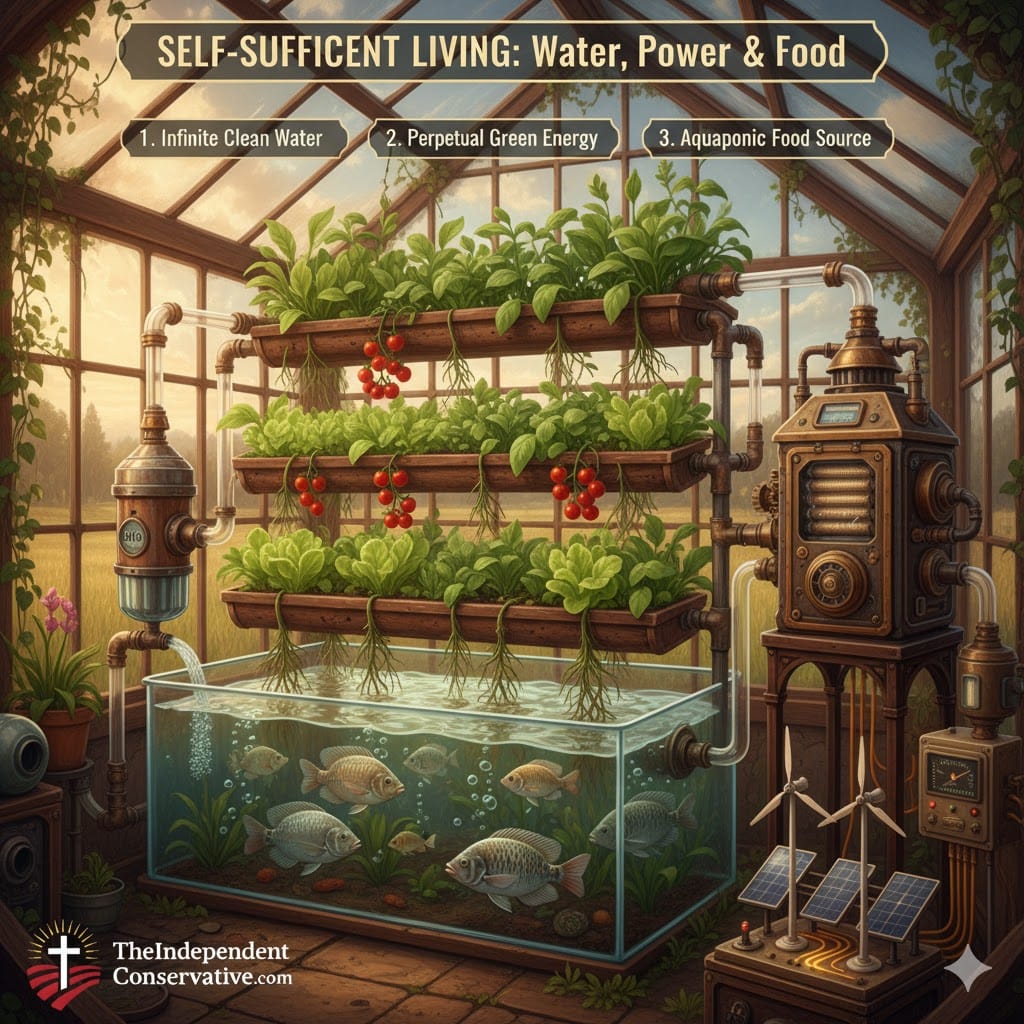
Becoming completely self-sufficient is a challenging yet rewarding endeavor, enabling independence from public utilities and supply chains. Knowing how to become less dependent on society and become completely self-sufficient is important in times of extreme emergency. This guide explores key steps: generating your own electricity using a closed-loop water system, securing a perpetual source of clean water through atmospheric water generators, and establishing a sustainable food supply with aquaponics. In order to become less dependent on society.
1. Becoming Completely Self-Sufficient by Generating Perpetual Electricity with a Closed-Loop Water System
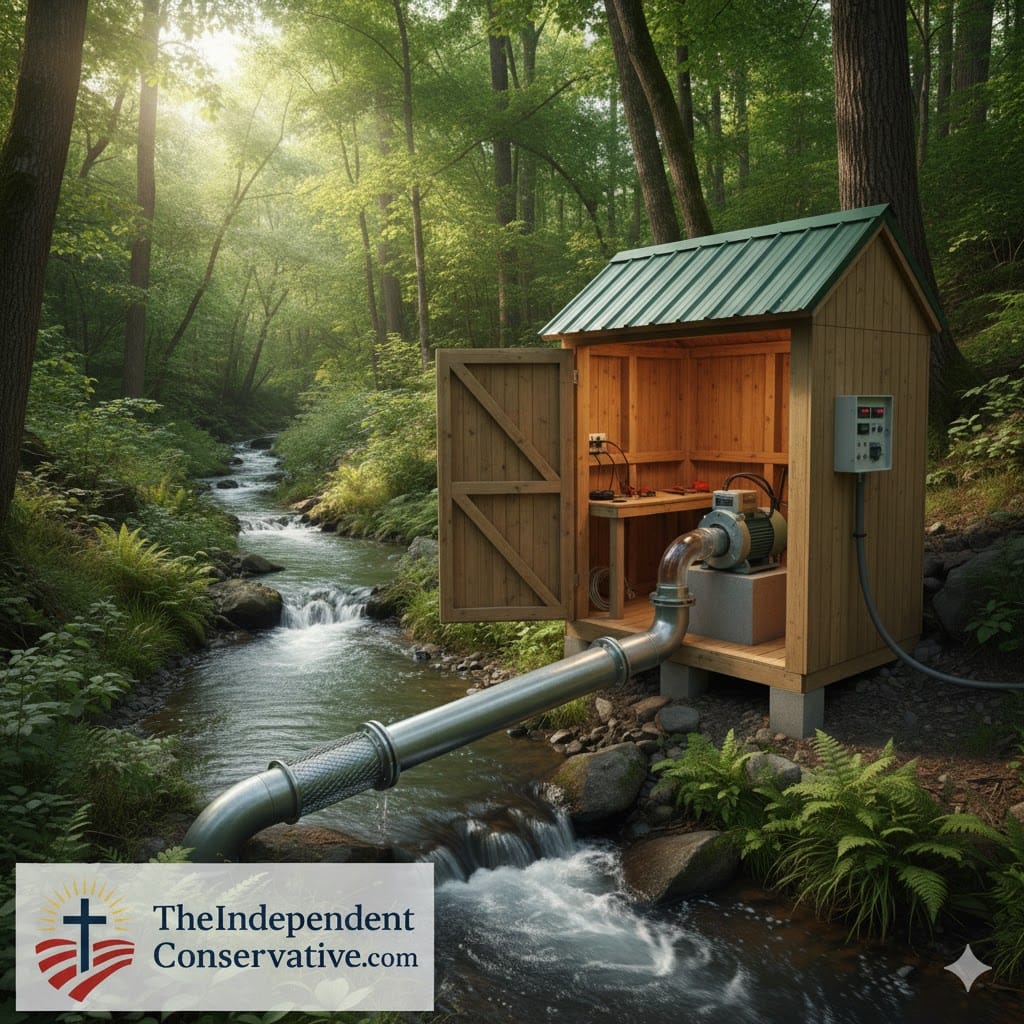
The concept of a perpetual motion machine for electricity generation, while appealing, often runs into fundamental laws of physics, specifically the law of conservation of energy. In any real-world system, energy is lost as heat due to friction and inefficiencies. However, we can design a highly efficient, recirculating water system that, once charged with an initial energy input, can continuously generate electricity for specific applications, especially if connected to a reliable, external power source for “topping up” or if the system is designed to leverage a natural elevation difference.
For illustrative purposes, let’s explore a closed-loop system for generating electricity using water,
System Overview:
Imagine a simple setup with two water barrels, one elevated above the other, connected by a pipe that directs water through a hydro-electric generator.
The Perpetual Electricity Concept:
- Elevated Barrel: A barrel positioned at a height holds a volume of water.
- Water Generator: A pipe from the bottom of the elevated barrel leads down to a hydro-electric water generator. As water flows through the generator due to gravity, it spins a turbine, producing electricity.
- Lower Barrel: The water exits the hydro-electric generator and collects in a lower barrel thereby providing an electric charge from the generator that can be sent to either an inverter to convert the generated power from DC to AC power or if your hydro-electric generator is automatically generating AC power, you can than send the power to your power box for your home.
- Water Pump: You can then place a water pump in the bottom of the lower barrel which is then used to push the water from the lower barrel back up into the elevated barrel, completing the cycle.
Achieving Practical Self-Sufficiency with this Concept of Becoming Completely Self-Sufficient:
This system, while recirculating water, is a true perpetual motion machine, for the reason that. The water pump in the bottom of the lower barrel is receiving power from the hydro-electric generator pushing power to your power box. Which than pushes the water against gravity back to the upper barrel. At which time, gravity will take over, sending the water back through the whole cycle over and over again. Add in the concept of a battery bank to store extra generated power as an added safety measure. Just in case any of the systems break downs. You will still have power stored in your battery bank until you can make repairs.
Having extra generators and replacement water pumps around is a good precaution as well. This will enable you to make repairs as soon as possible, without having to wait for the replacement parts. That may sound like a pricey concept. Yet, the odds of having to replace a hydroelectric generator more than once in your lifetime is highly unlikely as these things are generally built to last. So the expense of buying extra parts and storing them is a very good idea if you don’t want to end up without power. As a battery bank can only last so long and ordering replacement parts can sometimes take a long time.
2. Providing Clean Water with Atmospheric Water Generators is the Next Step in Becoming Completely Self-Sufficient.
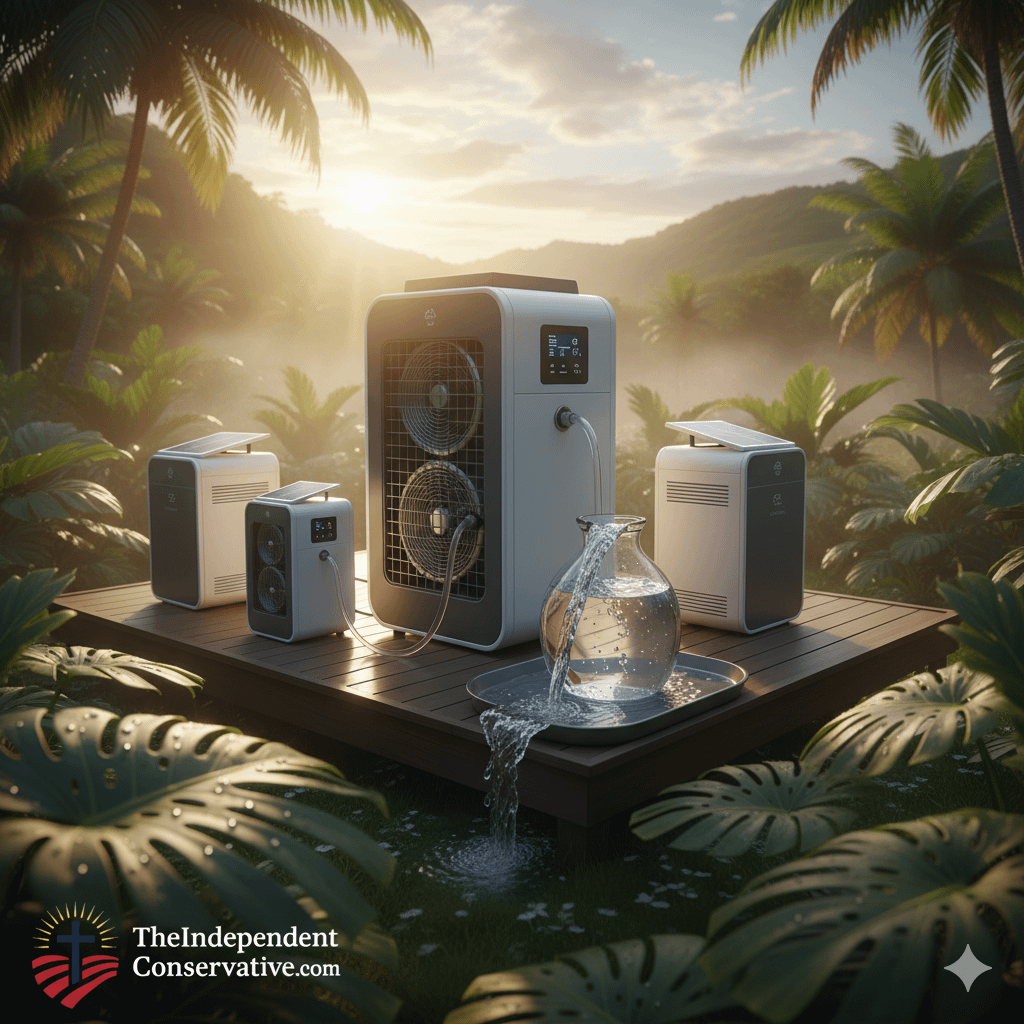
When considering becoming completely self-sufficient you must have access to clean, potable water. This is non-negotiable for self-sufficiency. While wells, rainwater harvesting, and filtration systems are viable options, Atmospheric Water Generators (AWGs) offer a unique and potentially infinite source of fresh water, especially in humid climates.
As described by Tsunami Products (and similar technologies), AWGs work by cooling air to its dew point, causing water vapor to condense into liquid water. This process mimics how dew forms naturally.
Benefits of Using Atmospheric Water Generators:
- Infinite Source (Potentially): As long as there is humidity in the air, an AWG can extract water. This makes it an almost limitless source, unlike wells that can run dry or rainwater harvesting which depends on rainfall. And there is always at least a little moisture in the air. This technology is being used by the US military in the deserts of Iraq to bathe and hydrate our US soldiers in the field.
- Decentralized Water Production: AWGs can produce water directly at the point of use, eliminating the need for complex infrastructure, pipelines, or municipal water supplies. This is ideal for remote homesteads or emergency preparedness.
- High-Quality Water: The condensation process naturally purifies water, as contaminants are typically not carried in water vapor. Further filtration in the AWG ensures the water is clean and safe to drink.
- Sustainable: Utilizes an abundant, natural resource (atmospheric humidity) without depleting groundwater or relying on chemical treatments.
- Scalable: Units range from small residential to large industrial sizes, allowing for varying water production capacities based on need.
- Resilience: Provides a reliable water source even during droughts or disruptions to traditional water supplies.
By deploying an appropriately sized AWG, you can tap into the nearly boundless supply of water vapor in the atmosphere, providing your home with a continuous and clean source of hydration.
3. Food Production with Aquaponics: Fruits, Vegetables, and Protein
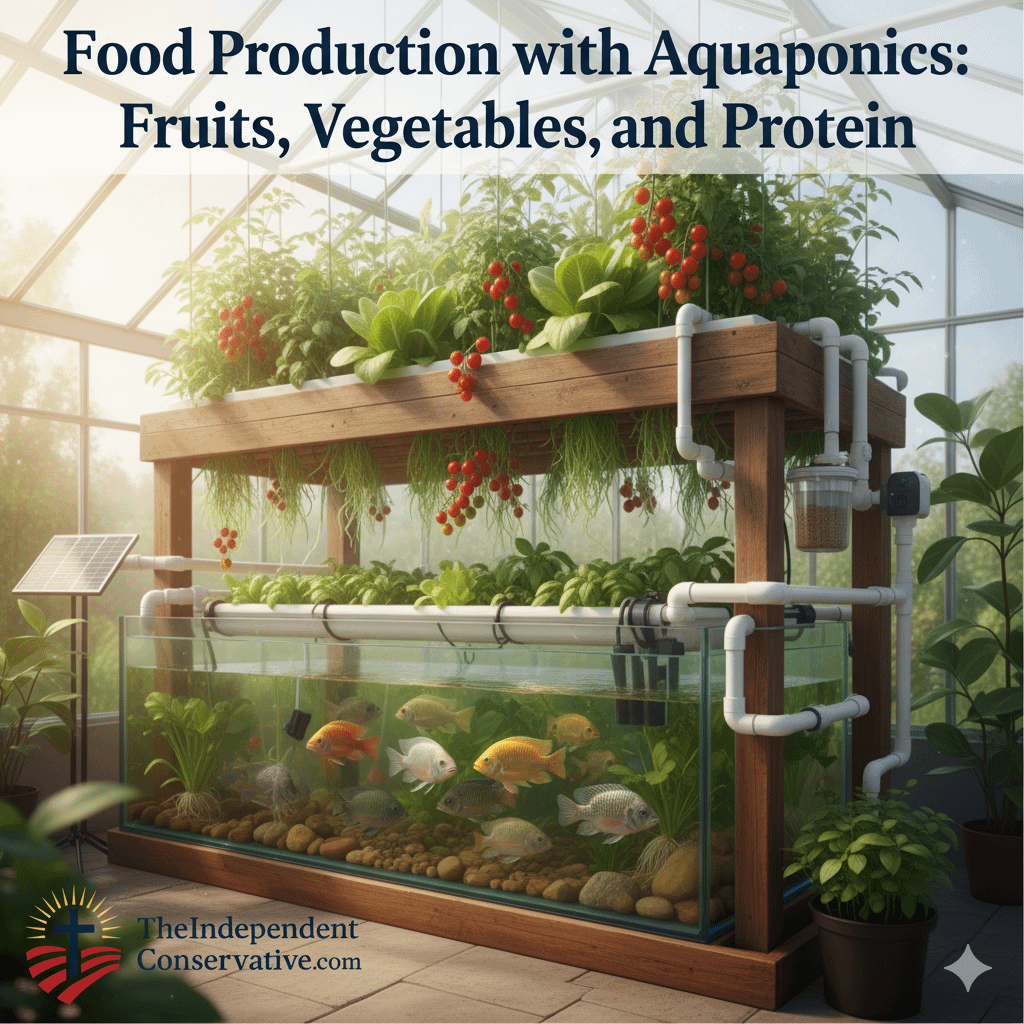
Once electricity and water are secured, the next crucial step to complete self-sufficiency is food production. Aquaponics offers an integrated system for growing both plants and fish, creating a highly efficient and sustainable food source.
What is Aquaponics?
Aquaponics combines aquaculture (raising fish) with hydroponics (growing plants without soil). In an aquaponics system:
- Fish Tank: Fish are raised in a tank, producing waste (ammonia).
- Biofilter: Beneficial bacteria in a biofilter convert the ammonia from fish waste into nitrates, which are plant nutrients.
- Grow Beds: The nutrient-rich water is then pumped to grow beds where plants absorb the nitrates as food.
- Recirculation: The cleaned water is then returned to the fish tank, completing the cycle.
Becoming Completely Self-Sufficient Using the Benefits of Aquaponics for Self-Sufficiency:
- Dual Production: Provides both fresh produce (fruits, vegetables, herbs) and a protein source (fish) from a single system.
- Water Efficiency: Uses significantly less water than traditional soil-based agriculture (up to 90% less) because the water is continuously recycled.
- No Weeding or Tilling: Eliminates the need for weeding, tilling, and many common gardening chores associated with soil.
- Faster Growth: Plants often grow faster in aquaponics due to the constant supply of nutrients and optimized growing conditions.
- Reduced Pests and Diseases: Soil-borne pests and diseases are eliminated, and a controlled environment can reduce other pest issues.
- Year-Round Growing: Can be set up indoors or in greenhouses, allowing for continuous production regardless of external weather conditions.
- Organic Fertilization: Fish waste naturally fertilizes the plants, eliminating the need for synthetic fertilizers.
- Space-Efficient: Can be designed vertically or in compact layouts, making it ideal for small spaces or urban homesteads.
Getting Started with Aquaponics:
- Choose Fish: Tilapia, trout, and carp are popular choices due to their hardiness and growth rate.
- Choose Plants: Leafy greens (lettuce, spinach, kale), herbs (basil, mint), and fruiting plants (tomatoes, peppers, strawberries) all do well.
- System Design: Research different aquaponics system designs (e.g., Media Beds, Nutrient Film Technique (NFT), Deep Water Culture (DWC)) to find one that suits your space and needs.
- Monitoring: Regular monitoring of water parameters (pH, ammonia, nitrites, nitrates) is crucial for a healthy system.
By integrating a recirculating electricity system, an atmospheric water generator, and a robust aquaponics setup, individuals can take significant strides toward achieving complete self-sufficiency, creating a resilient and sustainable lifestyle independent of external infrastructures.
If you are looking for ways to protect your family during an emergency, all while holding true to Christian biblical principals. Shop for all of your self-defense weapons and personal security products needs at our online shop.:
Product Categories:
Buy Diversion Safes for Sale Online
Buy DIY Home Security Alarms for Sale Online
Buy Hidden Spy Cameras for Sale Online
Buy Pocket Knives for Sale Online
- Buy Butterfly Knives for Sale Online
- Buy Heavy Duty Pocket Knives for Sale Online
- Buy Throwing Knives for Sale Online
Buy Pepper Sprays for Sale Online
- Buy Animal Repellents- Bear/Dog Pepper Spray for Sale Online
- Buy Pepper Ball Guns for Sale Online
- Buy Fogger Pepper Sprays for Sale Online
- Buy Pepper Gels for Sale Online
- Buy Stream Pepper Sprays for Sale Online
Buy Personal Alarms for Sale OnlineBuy Self-Defense Keychains for Sale OnlineBuy Stun Guns for Sale Online
- Buy Flashlight Stun Batons for Sale Online
- Buy Flashlight Stun Guns for Sale Online
- Buy Keychain Stun Guns for Sale Online
- Buy Taser Guns for Sale Online
Share this post:


