
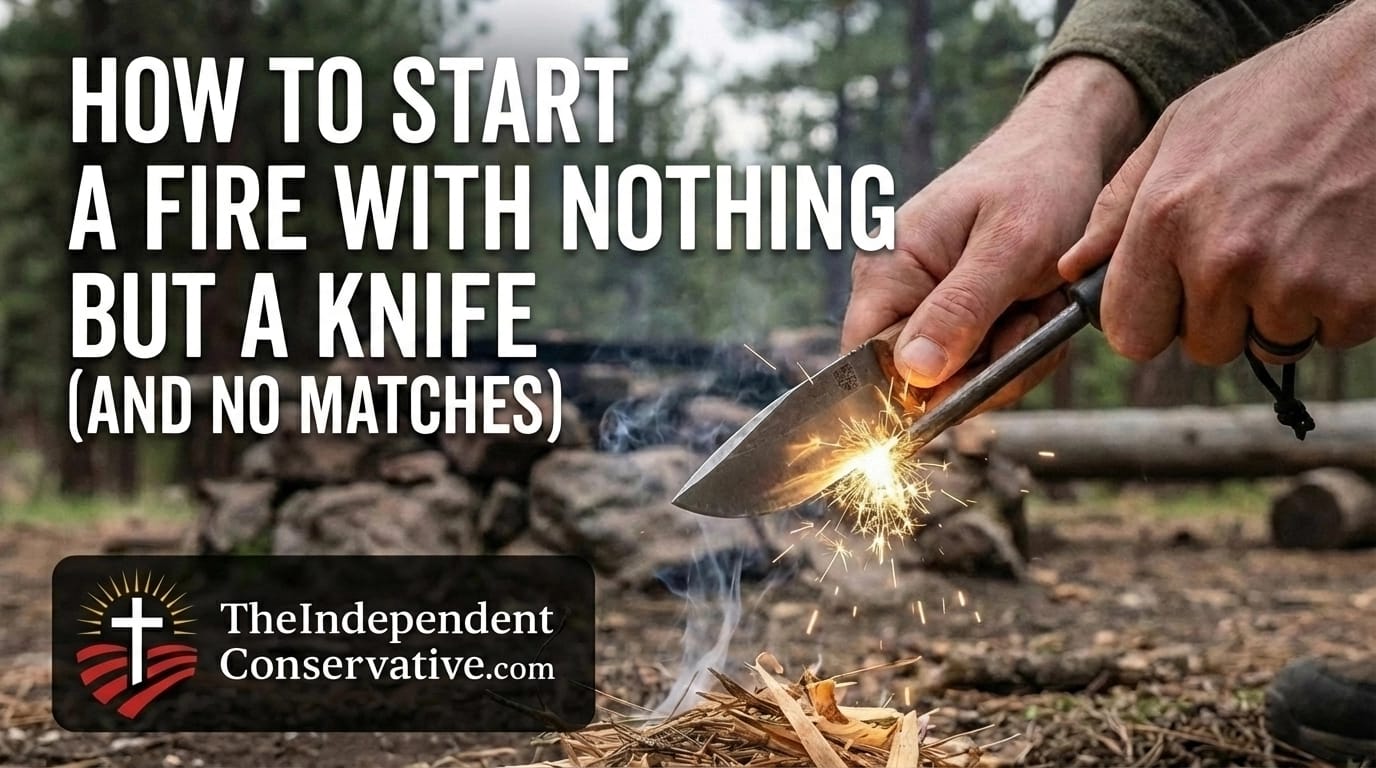
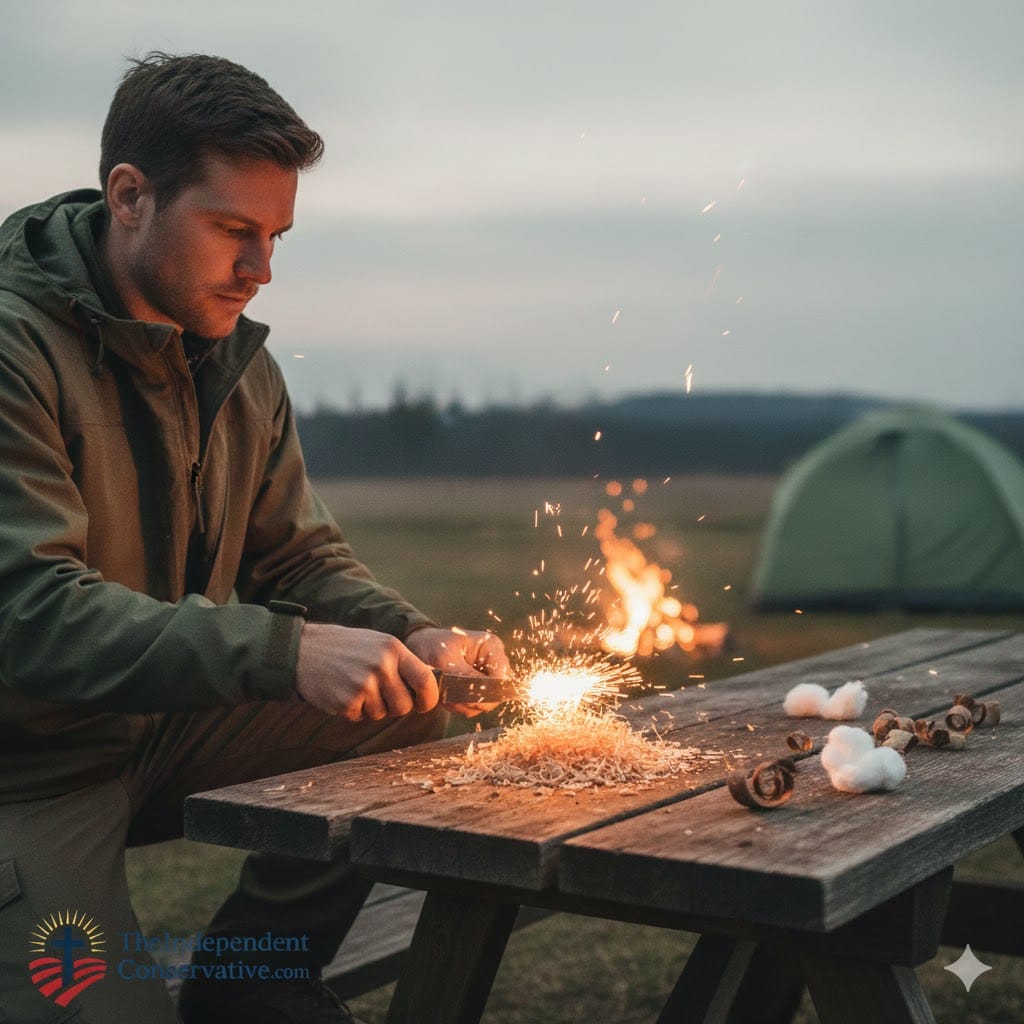
Today I want to talk about one of the most essential survival skills every conservative Christian should master – starting a fire with nothing but a knife. Take it from me from my own experience, when society collapses and you’re stripped down to basics, knowing how to create fire with minimal tools could literally save your life and your family’s lives.
As someone who’s been in situations where modern conveniences weren’t available, I can tell you that fire-making skills separate the prepared from the unprepared. As Proverbs 27:14 reminds us, “A prudent person foresees danger and takes precautions, but the simple go blindly on and suffer the consequences.”
Chance favors the prepared mind! And today, we’re going to prepare your mind with a time-tested technique that our ancestors relied on for thousands of years.
Why You Need This Skill Right Now
Let me be crystal clear about something – this isn’t just about camping trips or wilderness adventures. In today’s uncertain world, power grids fail, natural disasters strike, and supply chains break down. When your gas stove won’t work and your electric heat is dead, knowing how to create fire becomes a matter of life and death.
The method I’m teaching you today requires nothing more than a knife and materials you can find in nature. No fancy fire starters, no waterproof matches, no butane lighters – just your blade and God’s creation around you.
Understanding the Science Behind the Method
Before we dive into the practical steps, you need to understand what we’re actually doing here. The technique I call the “Knife and Stone Method” relies on the same principle that blacksmiths have used for centuries – creating sparks through friction between steel and flint.
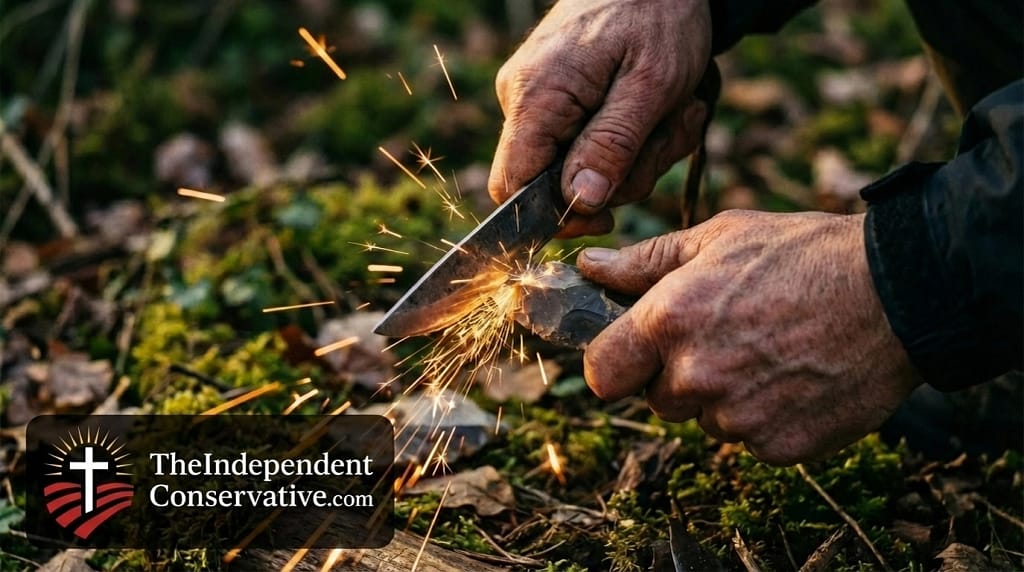
When you strike the back of your knife blade against a sharp stone edge, you’re literally shaving off tiny metal particles that ignite from the friction. These hot metal shavings – sparks – can then ignite properly prepared tinder.
Rule #1: Find the Right Stone (Your Fire Depends on It)
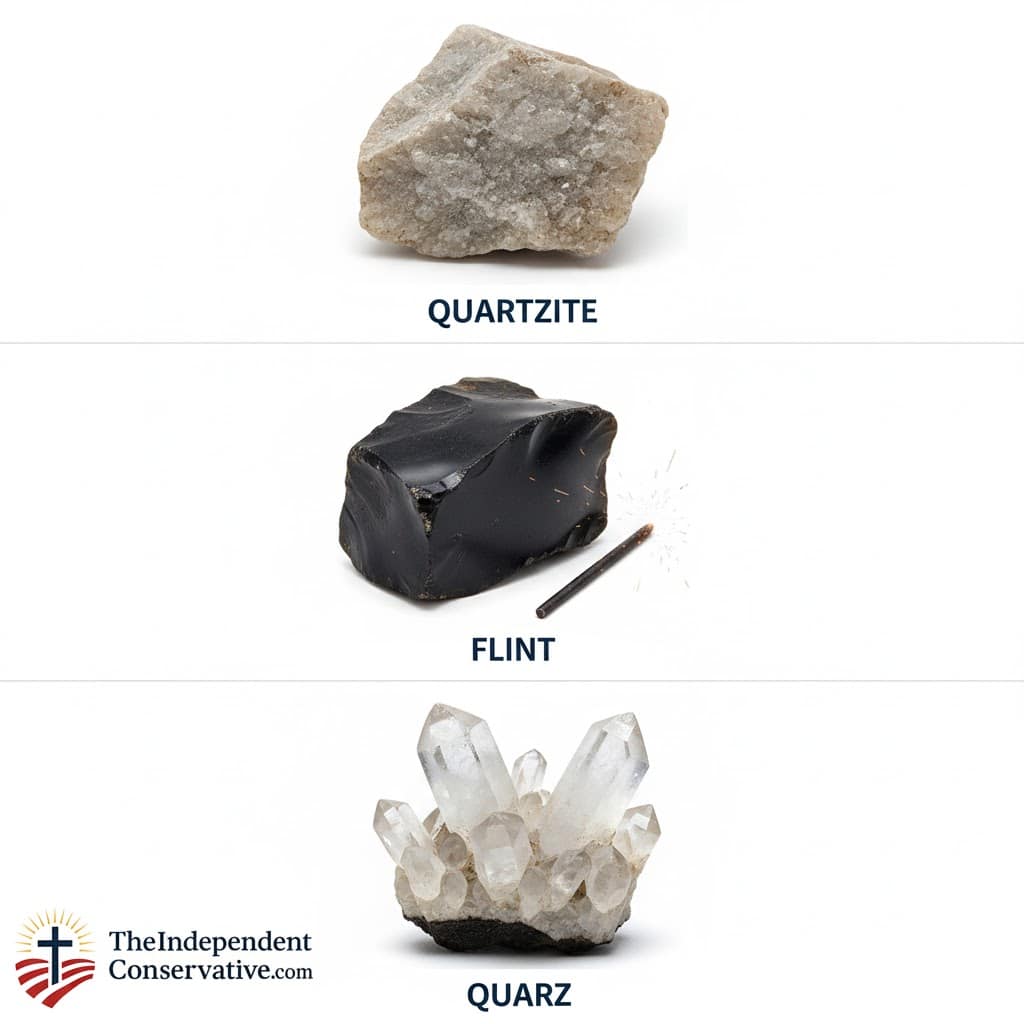
Your success with this method starts with finding the correct type of stone. Not just any rock will do – you need quartzite, flint, or quartz. These stones are hard enough to scrape metal from your knife blade.
Here’s what to look for:
- Sharp, angular edges (not rounded river rocks)
- Hard stone that makes a ringing sound when struck
- Flat or disc-shaped rocks are easier to work with than round ones
- Fresh break surfaces often work better than weathered edges
If you can’t find a naturally sharp stone, you can create one by dropping a larger quartzite boulder against another rock. This will chip off pieces with fresh, sharp edges perfect for striking.
Which brings me to rule #2…
Rule #2: Prepare Your Tinder Like Your Life Depends on It
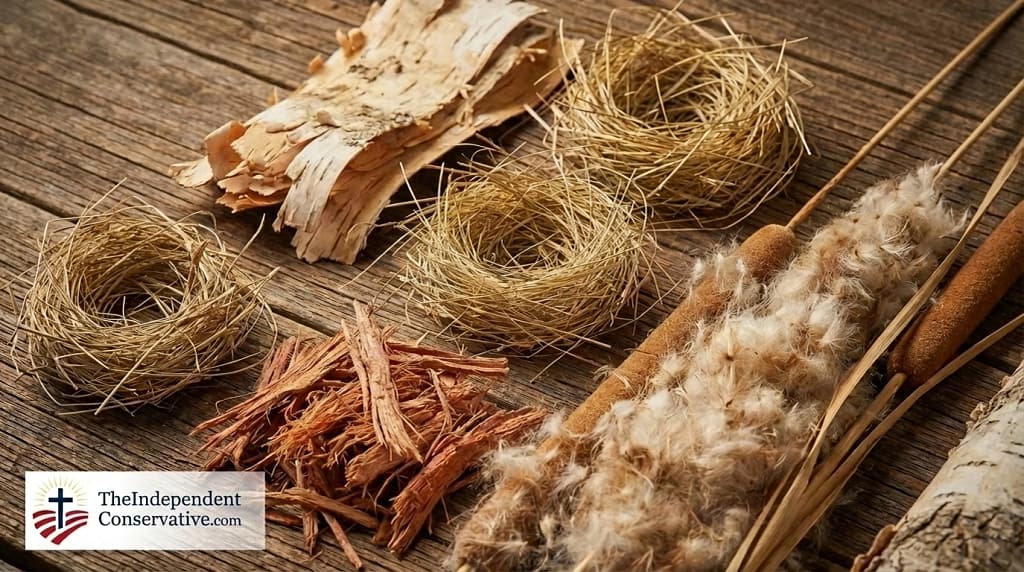
Without proper tinder, even the best sparks won’t help you. Tinder is what catches and holds the initial spark, allowing you to nurture it into flame. In survival situations, good tinder is worth its weight in gold.
The best natural tinder materials include:
- Birch bark (papery outer bark that peels off in sheets)
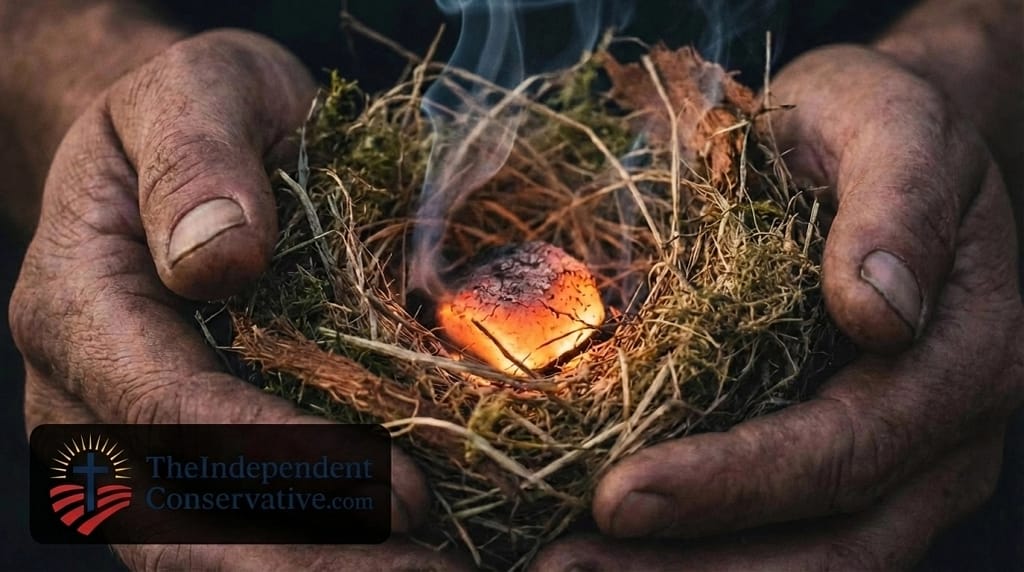
- Dry grass bundled into a bird’s nest shape
- Cedar bark shredded into fine fibers
- Cattail fluff from mature cattail seed heads
- Dry pine needles crushed to expose inner fibers
Your tinder needs to be bone dry and processed into the finest possible material. I like to work it between my hands until it becomes almost like cotton. The finer your tinder, the easier it catches sparks.
Rule #3: Master the Striking Technique
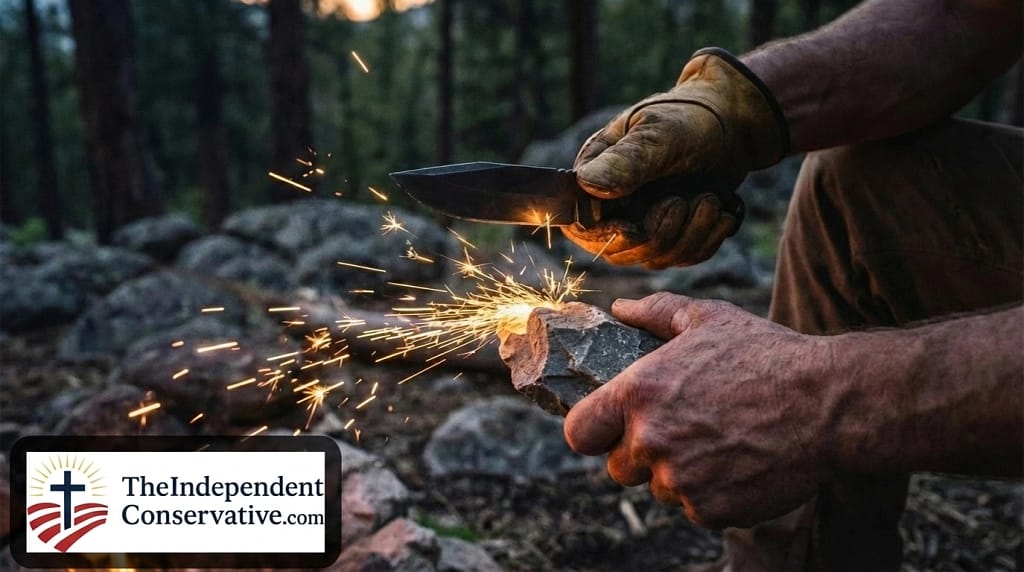
Here’s where most people mess up – they think brute force is the answer. Wrong. This technique requires precision, not power.
The proper grip:
- Hold the stone loosely in your non-dominant hand
- Position the sharp edge horizontally at about a 70-degree angle
- Grip your knife by the spine (back edge) with your dominant hand
- Keep the sharp edge of the knife facing toward your palm
The striking motion:
- Use a glancing, vertical motion downward
- Strike the back edge of your knife blade against the stone’s sharp edge
- The motion should be controlled and deliberate
- You want to “scrape” metal off, not bash the knife
Start practicing gently to develop muscle memory. Once you can produce consistent sparks with each stroke, you’re ready for the real thing.
Rule #4: Position Everything for Success
This is what I call the “spark catch setup” – and it’s absolutely critical. You need to position your tinder so it catches the sparks without interfering with your striking motion.
The setup:
- Hold your tinder bundle against the stone with your thumb
- Position it right at the edge where the knife will strike
- Keep it close enough to catch sparks but not so close the knife hits it
- Have your kindling (small twigs) ready nearby
- Have your fuel wood (larger sticks) organized by size
Remember – sparks fly in an arc away from the striking point. Position your tinder to intercept this arc.
Rule #5: Nurture the Spark Into Flame
When you finally get a spark to catch in your tinder, don’t get excited and blow too hard. This kills more fires than anything else. The spark will start as a tiny glowing ember buried in your tinder.
The nurturing process:
- Gently lift the tinder bundle and blow softly on the ember
- Increase airflow gradually as the glow spreads
- When you see thin smoke rising, continue gentle blowing
- The moment it bursts into flame, immediately add your finest kindling
- Build up slowly – don’t smother the new flame
As Scripture says in Isaiah 42:3, “A bruised reed he will not break, and a smoldering wick he will not snuff out.” Treat your ember with the same gentle care.
Critical Safety Considerations
Let me be straight with you about the dangers here. The biggest risk with this method is that your knife’s sharp edge faces toward your hand. If your grip slips due to cold, wetness, or fatigue, you could seriously cut yourself.
Safety measures:
- Always cut away from your body
- Take frequent breaks to prevent hand fatigue
- Consider burying your knife tip in wood to create a stationary striker
- Keep a first aid kit accessible
- Practice this skill when you’re not in a survival situation
If conditions are wet or your hands are numb from cold, consider the alternative setup where you embed your knife blade in a piece of wood at an angle, creating a stationary target you can strike against.
Troubleshooting Common Problems
No sparks appearing?
- Your stone might not be hard enough (try finding flint or quartzite)
- You might be striking at the wrong angle
- The knife blade might be too dull on the spine
Sparks but no catch in tinder?
- Your tinder might be too coarse or damp
- You might not be positioning it correctly in the spark stream
- Process your tinder finer and drier
Ember dies out before flame?
- You’re probably blowing too hard too fast
- Add more fine tinder around the ember
- Blow more gently and consistently
Building Your Fire Foundation
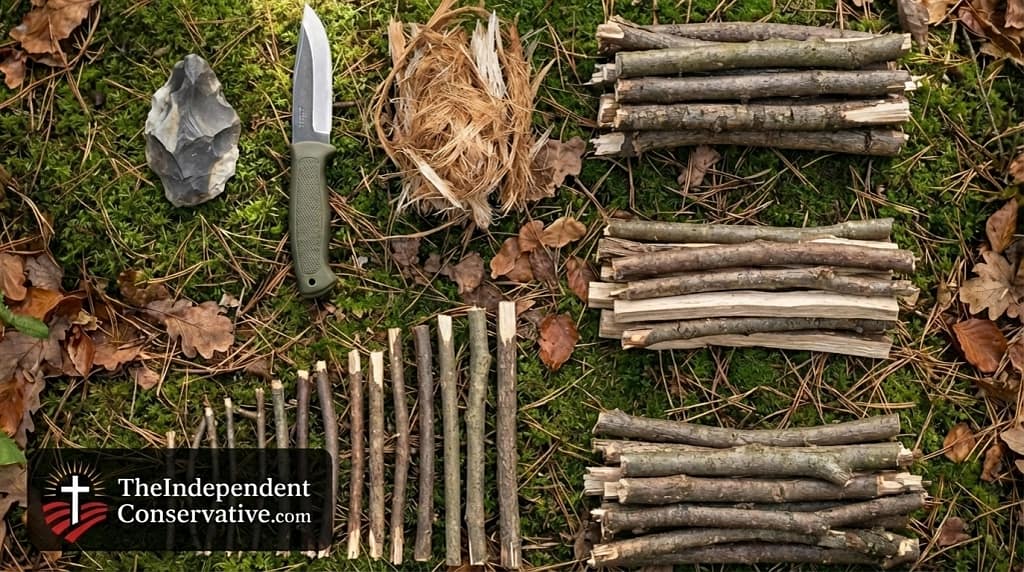
Once you’ve mastered creating the initial flame, you need to know how to build it into a sustainable fire. This follows the “teepee method” that’s worked for countless generations.
Start with pencil-thin kindling, then finger-thick, then thumb-thick, gradually building up to wrist-thick fuel wood. Each stage should be burning well before you add the next size up.
Practice Makes Perfect (And Saves Lives)
Here’s the hard truth – you cannot learn this skill when you’re already in an emergency. Your hands will be shaking, you’ll be stressed, and everything that can go wrong will go wrong. You need to practice this skill regularly under controlled conditions.
I recommend practicing this technique at least once a month. Try it in different weather conditions – light rain, wind, cold temperatures. Each environment teaches you something new about fire-making.
Final Thoughts: Preparedness as Christian Stewardship
Being able to start a fire with just a knife isn’t about playing survivalist games. It’s about being a good steward of the life God gave you and your family. When you develop these skills, you’re preparing to protect and provide for those under your care.
As 1 Timothy 5:8 reminds us, “Anyone who does not provide for their relatives, and especially for their own household, has denied the faith and is worse than an unbeliever.” Learning survival skills like fire-making is part of that provision.
The bottom line? Master this technique now, while you have the luxury of practice. Your future self – and your family – will thank you when the lights go out and the modern world fails around you.
Stay prepared, stay faithful, and remember – chance favors the prepared mind!
Share this post:

